
2025_Xuanyuan
1.ezre
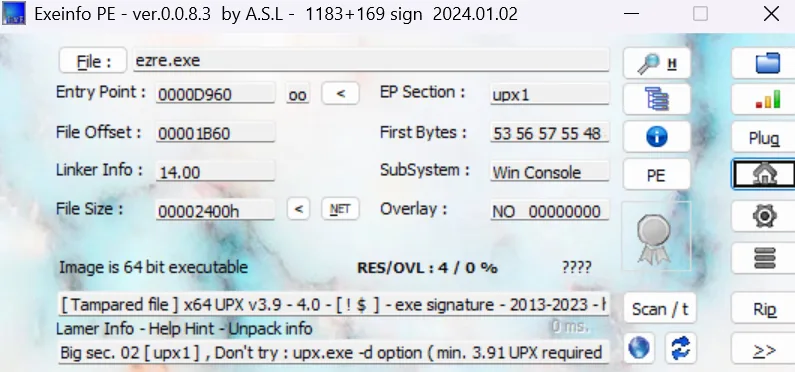
exeinfo查看,UPX壳
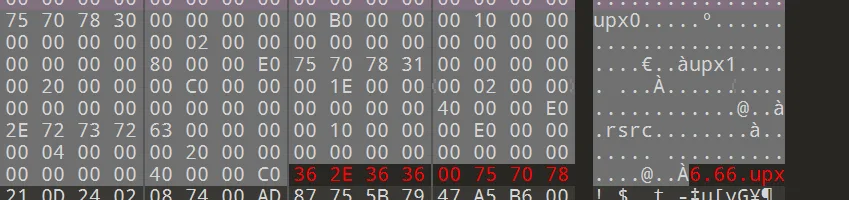
010editor查看文件格式可发现其符合UPX壳的区段码,但是出题人把大写改成了小写
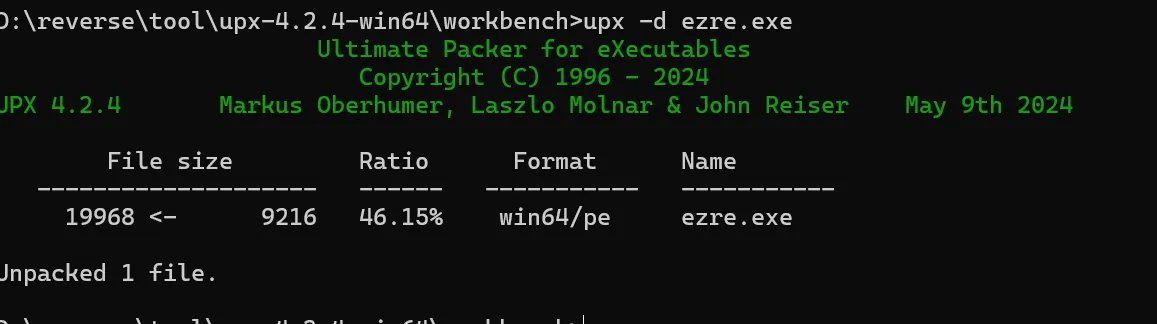
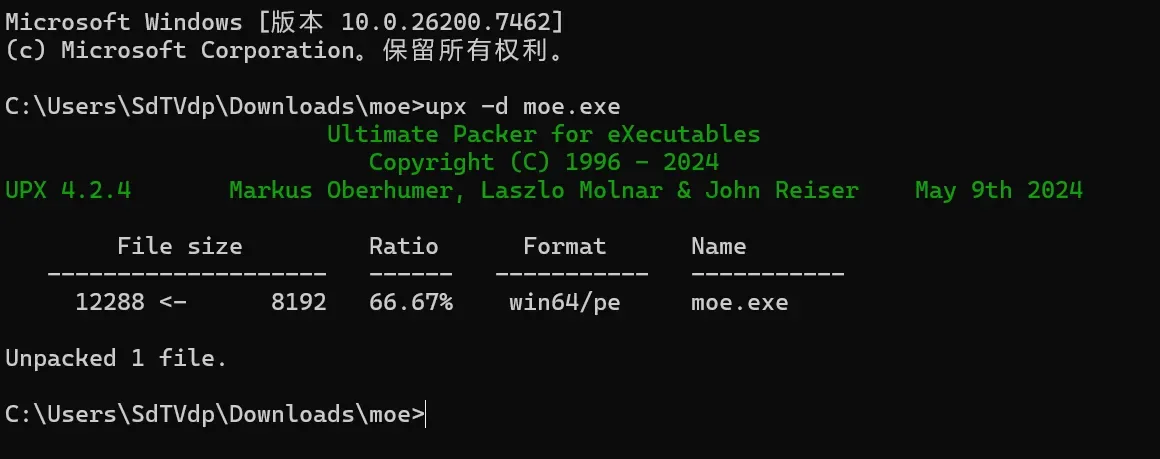
这样就可以upx-d了,然后IDA打开即可
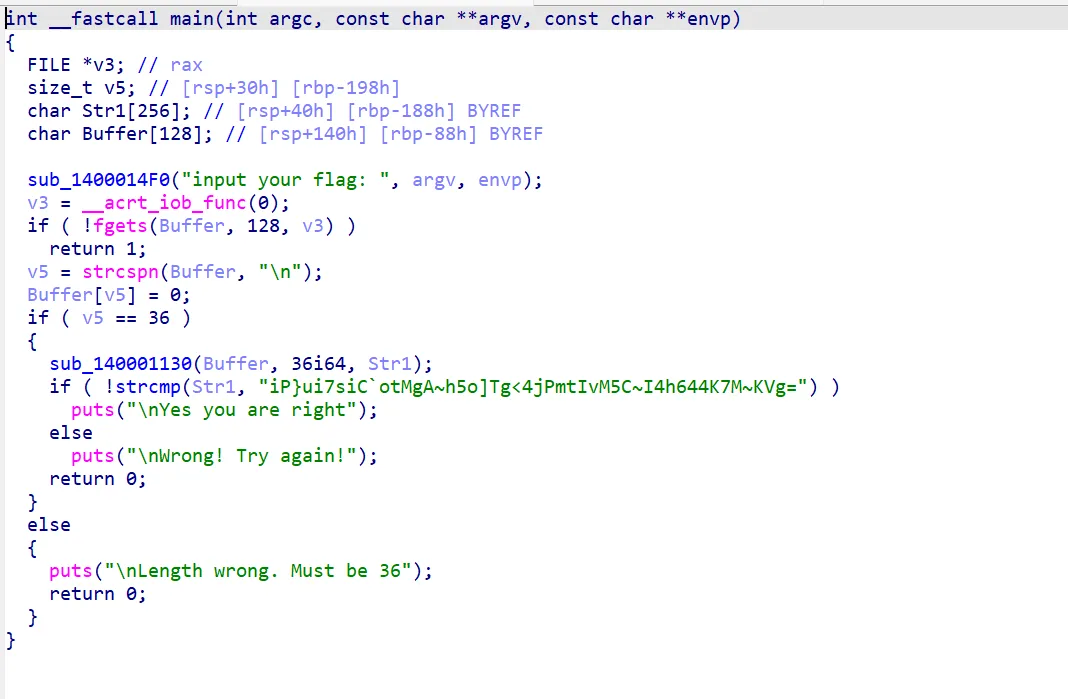
可见sub_140001130就是加密函数

可以从这里直接看到字母表和密文,直接对着1130函数反写即可
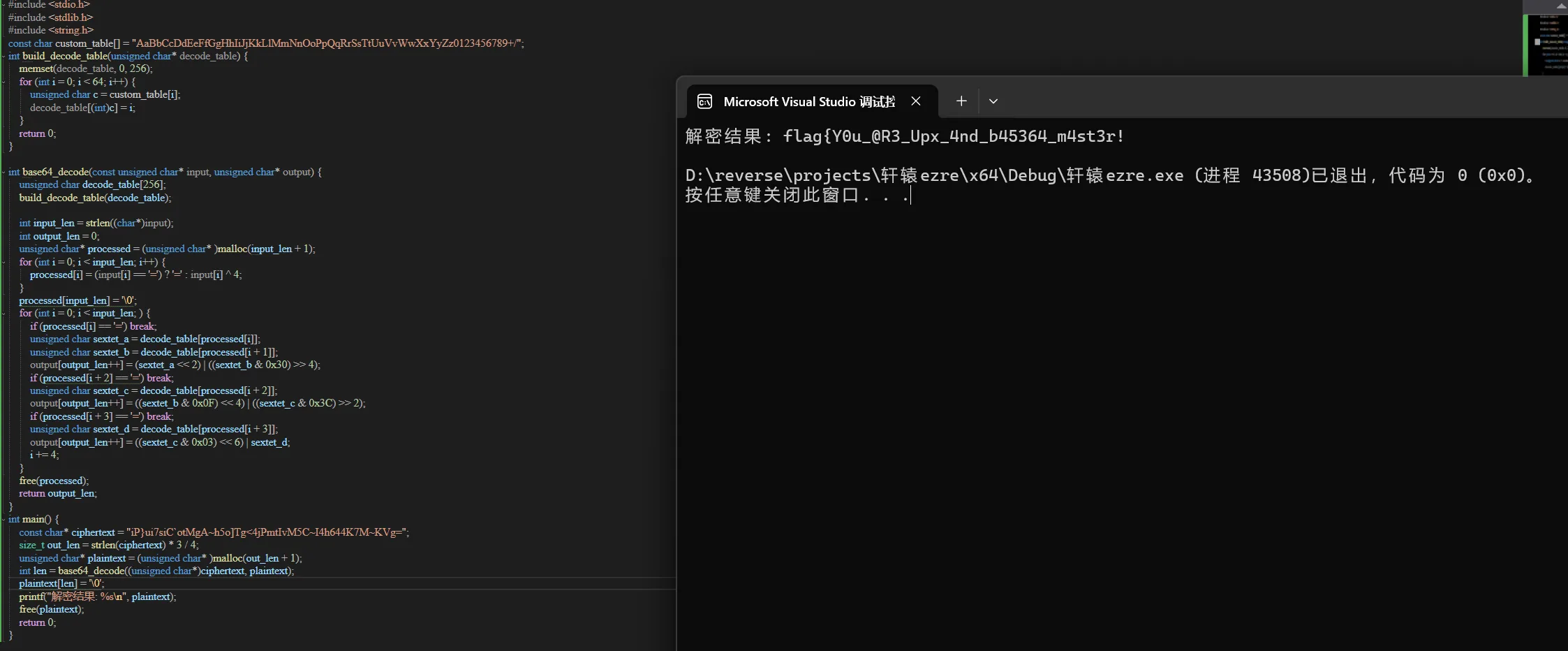
获得flag{Y0u_@R3_Upx_4nd_b45364_m4st3r!}
2.你知道base么
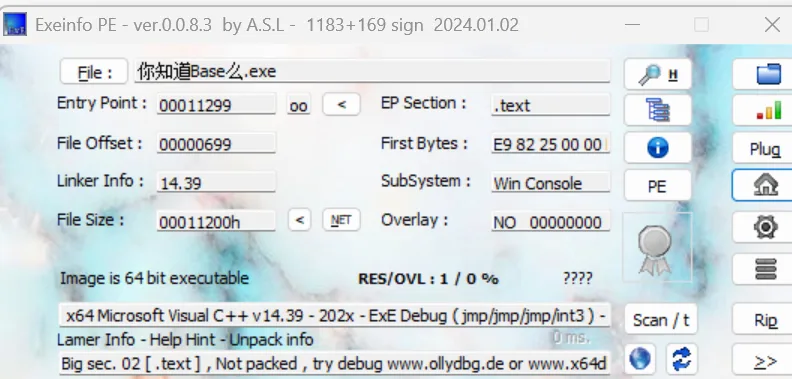
64位无壳直接做
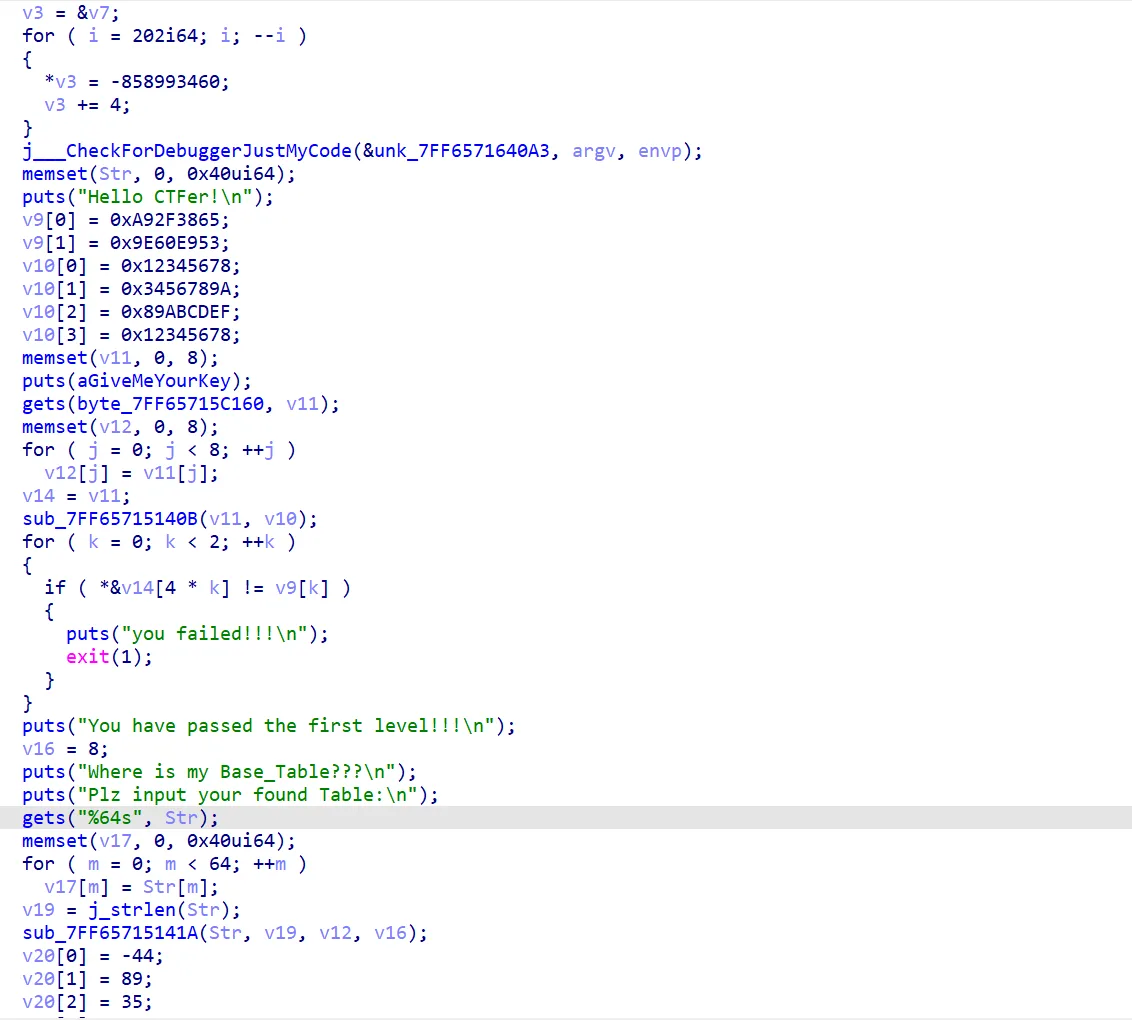
可见这个由两个部分组成,上半部分是tea加密,下半部分需要我们自行寻找base加密表
tea加密的逻辑都在 sub_7FF65715140B里面,点进去就可以看到
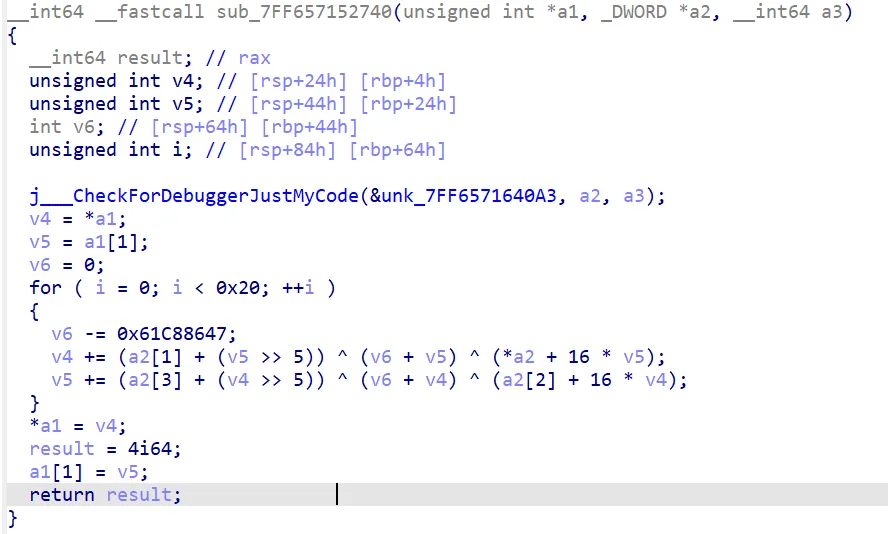
标准tea加密,直接写代码即可
#include <stdio.h>
#include <stdint.h>

void decrypt(uint32_t* v, uint32_t* key) {
    uint32_t v4 = v[0];
    uint32_t v5 = v[1];
    uint32_t delta = 0x61C88647;
    uint32_t v6 = -32 * delta;
    for (int i = 0; i < 32; i++) {
        uint32_t g_part = (key[3] + (v4 >> 5)) ^ (v6 + v4) ^ (key[2] + 16 * v4);
        v5 -= g_part;
        uint32_t f_part = (key[1] + (v5 >> 5)) ^ (v6 + v5) ^ (key[0] + 16 * v5);
        v4 -= f_part;
        v6 += delta;
    }

    v[0] = v4;
    v[1] = v5;
}

int main() {
    uint32_t cipher[2] = { 0xA92F3865, 0x9E60E953 };
    uint32_t key[4] = { 0x12345678, 0x3456789A, 0x89ABCDEF, 0x12345678 };
    decrypt(cipher, key);
    unsigned char* flag = (unsigned char*)cipher;
    printf("key1: ");
    for (int i = 0; i < 8; i++) {
        printf("%c", flag[i]);
    }
    printf("\n");
    return 0;
}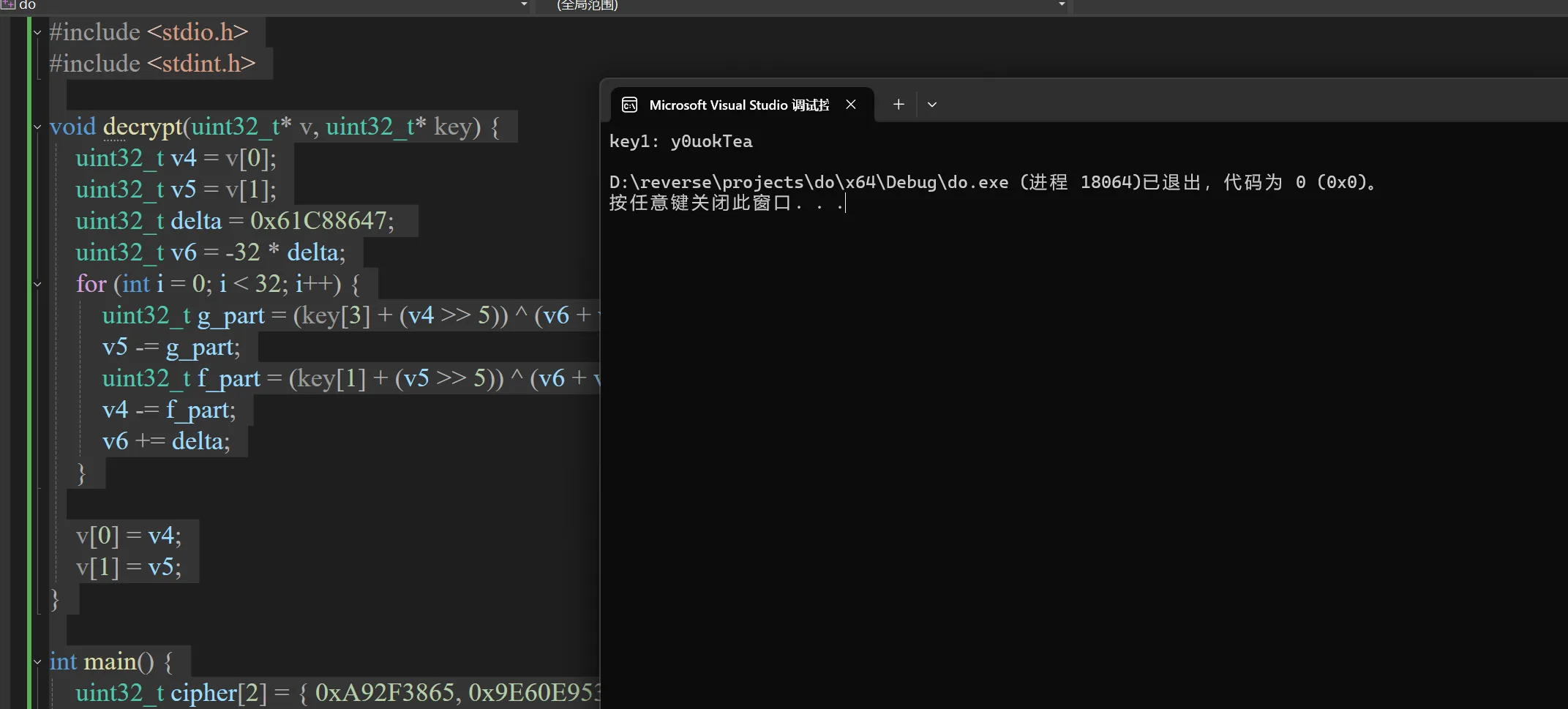
得到一阶段密钥,然后就是寻找base64表的过程
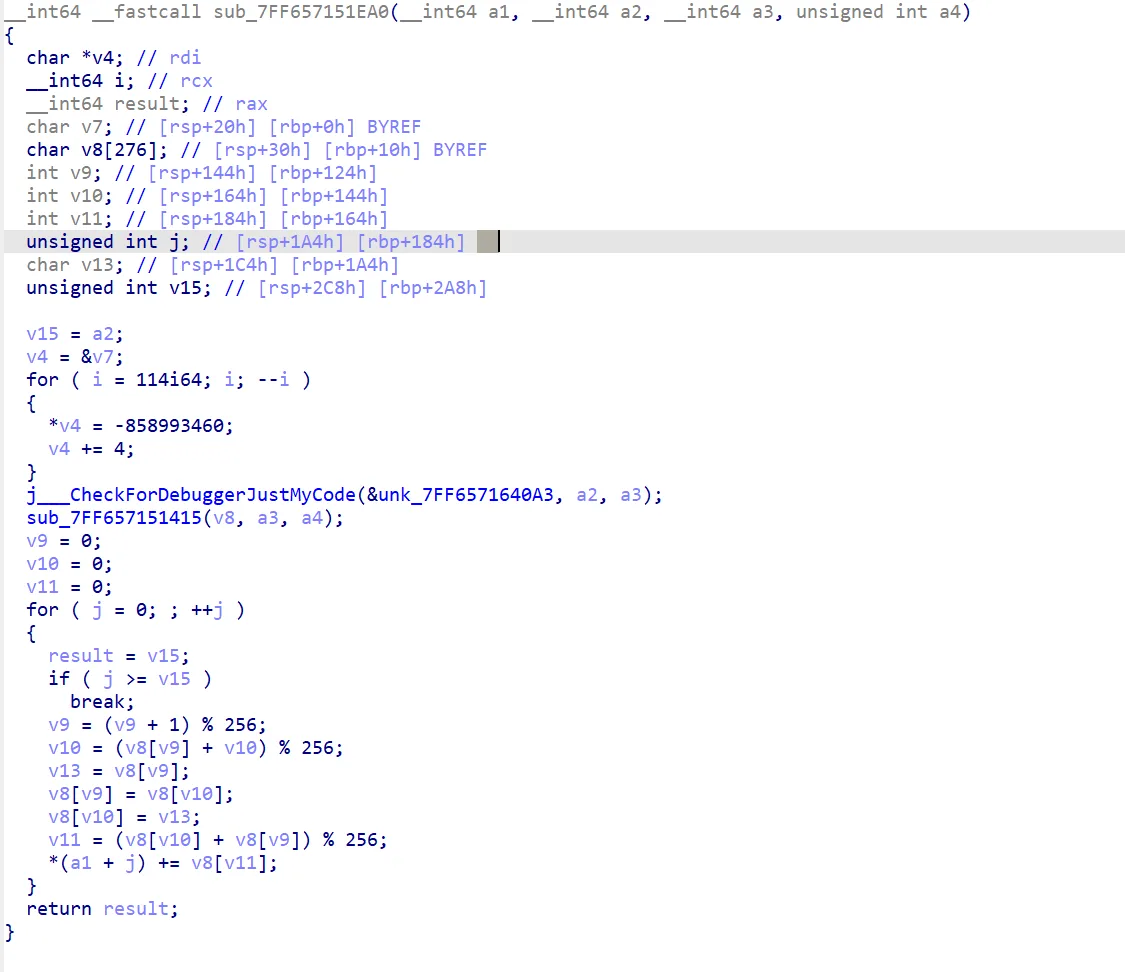
然后就可以看到这段rc4加密的内容,由此我们可以得知上一步的y0uokTea同时也是rc4的密钥
了解了rc4的代码后直接写解密代码即可
#include <stdio.h>
#include <stdint.h>
#include <stdlib.h>
#include <string.h>
uint8_t* rc4_keystream(const uint8_t* key_bytes, size_t key_len, size_t length) {
    uint8_t* S = (uint8_t*)malloc(256 * sizeof(uint8_t));
    for (int i = 0; i < 256; i++) {
        S[i] = i;
    }
    int j = 0;
    for (int i = 0; i < 256; i++) {
        j = (j + S[i] + key_bytes[i % key_len]) % 256;
        uint8_t tmp = S[i];
        S[i] = S[j];
        S[j] = tmp;
    }
    uint8_t* out = (uint8_t*)malloc(length * sizeof(uint8_t));
    int i = 0;
    j = 0;
    for (size_t n = 0; n < length; n++) {
        i = (i + 1) % 256;
        j = (j + S[i]) % 256;
        uint8_t tmp = S[i];
        S[i] = S[j];
        S[j] = tmp;
        uint8_t t = (S[i] + S[j]) % 256;
        out[n] = S[t];
    }
    return out;
}
uint8_t* base_decode(const uint8_t* cipher_bytes, size_t cipher_len, const uint8_t* table, size_t table_len, size_t* out_len) {
    int* idxs = (int*)malloc(cipher_len * sizeof(int));
    for (size_t i = 0; i < cipher_len; i++) {
        for (int j = 0; j < table_len; j++) {
            if (table[j] == cipher_bytes[i]) {
                idxs[i] = j - 1;
                break;
            }
        }
    }
    uint32_t bits = 0;
    int bitlen = 0;
    uint8_t* out = (uint8_t*)malloc(cipher_len * 5 / 8 + 1);
    size_t out_pos = 0;
    for (size_t i = 0; i < cipher_len; i++) {
        bits = (bits << 5) | (idxs[i] & 0x1F);
        bitlen += 5;
        while (bitlen >= 8) {
            bitlen -= 8;
            out[out_pos++] = (bits >> bitlen) & 0xFF;
        }
    }
    *out_len = out_pos;
    return out;
}

int main() {
    uint8_t key_bytes[8] = { 'y', '0', 'u', 'o', 'k', 'T', 'e', 'a' };
    int8_t v21[] = { -44, 89, 35, 118, -76, -65, -29, 44, 88, -113, 86, 25, -38, -16, -64, -67,
                    54, 61, 123, 70, 27, -72, 23, 31, -29, -48, 3, 69, -51, 4, -19, -55,
                    103, -26, -85, 41, -89, -68, 11, -34, 92, 48, 113, -41, -43, 90, -58, -97,
                    64, 101, -60, 113, -87, -61, -82, -39, -75, -27, 18, -116, 0x80 };
    size_t cipher2_len = sizeof(v21) / sizeof(v21[0]);
    uint8_t* cipher2 = (uint8_t*)malloc(cipher2_len);
    for (size_t i = 0; i < cipher2_len; i++) {
        cipher2[i] = (uint8_t)v21[i];
    }
    uint8_t* ks = rc4_keystream(key_bytes, 8, cipher2_len);
    uint8_t* table_bytes = (uint8_t*)malloc(cipher2_len);
    for (size_t i = 0; i < cipher2_len; i++) {
        table_bytes[i] = (cipher2[i] - ks[i]) & 0xFF;
    }
    const char* cipher3_str = "0tCPwtnncFZyYUlSK/4Cw0/echcG2lteBWnG2Ulw0htCYTMW";
    size_t cipher3_len = strlen(cipher3_str);
    uint8_t* cipher3 = (uint8_t*)cipher3_str;
    size_t table_len = cipher2_len;
    size_t flag_len;
    uint8_t* flag = base_decode(cipher3, cipher3_len, table_bytes, table_len, &flag_len);
    printf("flag = %.*s\n", (int)flag_len, flag);
    return 0;
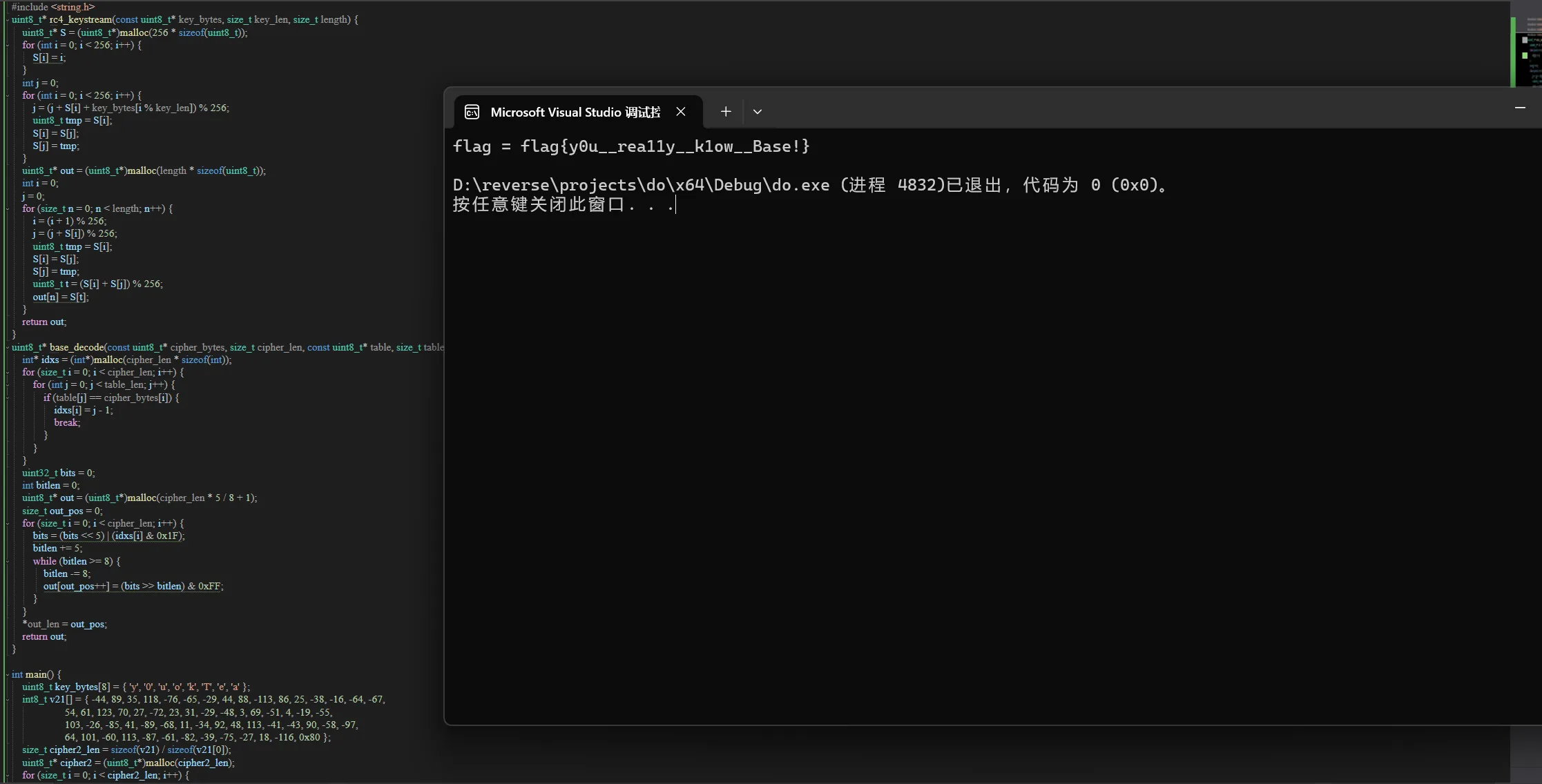
}
相关推荐
2026-03-29
2026_PolarisCTF
PolarisCTF逆向题目的wp,非常有幸能够领教到TokameinE师傅在shakelife这道题出题的时候针对ai解题做的小巧思,让我意识到至少现在,手解题目仍然存在意义

2025-05-01
2025_ISCC
I(P)S(Y)CC校赛逆向题目的wp
2025-12-20
2025_MoeCTF
moectf逆向题目的wp
2025-04-12
2025_TGCTF
TGCTF 与 HZNUCTF 部分逆向题记录,包含 base64、Unity、z3 和 XTEA 题目。
2025-05-02
2025_ISCC
I(P)S(Y)CC省赛逆向题目的wp

2025-12-28
2025_CCISC
全国大学生信息安全竞赛逆向题目的wp